China has become an important sourcing destination for international buyers looking for coconut-based products. From coconut milk and coconut oil to coconut powder, coconut candy, coco peat, coir fiber, and coconut shell products, Chinese manufacturers can offer a wide range of products for wholesalers, distributors, retailers, food companies, agricultural businesses, and international brands.
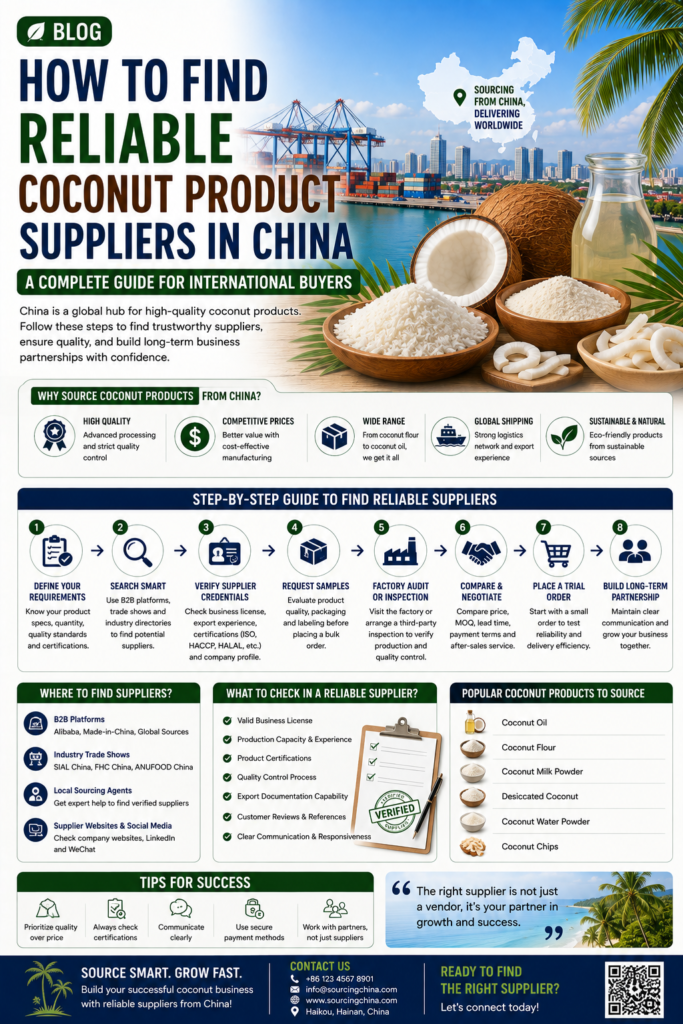
However, finding a supplier is relatively easy. Finding a reliable supplier that can consistently deliver the right quality, quantity, price, documentation, and service is much more important.
For international buyers, supplier selection should involve more than comparing product prices on an online marketplace. You need to verify the company, understand its manufacturing capabilities, check product specifications, request samples, evaluate quality, and confirm export experience.
This guide explains how to find and evaluate reliable coconut product suppliers in China.
Why Source Coconut Products From China?
China has a large manufacturing and processing industry with extensive domestic and international supply chains.
For coconut products, international buyers can potentially source both finished products and raw or semi-processed materials.
Examples include:
- Coconut milk
- Coconut cream
- Coconut oil
- Coconut water
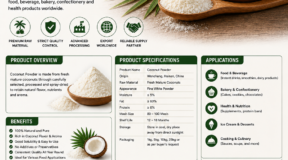
- Coconut powder
- Coconut milk powder
- Coconut flour
- Desiccated coconut
- Coconut candy
- Coconut chips
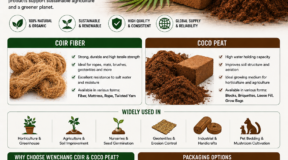
- Coco peat
- Coco peat blocks
- Coir fiber
- Coir mats
- Coconut shell charcoal
- Coconut shell powder
- Coconut shell activated carbon
- Coconut-based handicrafts
China can also be useful for buyers who want customized packaging, private-label products, or products developed according to specific requirements.
Wenchang, Hainan: An Important Area to Explore
If you are specifically interested in coconut products, Wenchang in Hainan Province is an area worth researching.
Wenchang has a long-established coconut-growing and processing industry. The region is associated with coconut cultivation, coconut food products, beverages, and coconut by-products.
International buyers researching Chinese coconut suppliers can therefore consider Wenchang and other areas of Hainan alongside suppliers in mainland China.
Potential products to investigate include:
- Coconut milk
- Coconut oil
- Coconut powder
- Coconut candy
- Coconut snacks
- Coco peat
- Coir fiber
- Coconut shell products
However, buyers should evaluate each supplier individually rather than assuming that every company in a coconut-producing region is a suitable manufacturer.
Step 1: Clearly Define the Product You Need
Before searching for suppliers, prepare a detailed product specification.
For example, instead of asking:
“I need coconut powder.”
provide information such as:
- Product type
- Intended application
- Required ingredients
- Quality grade
- Particle size
- Moisture requirement
- Packaging
- Quantity
- Target price
- Destination country
- Required certifications
- Delivery requirements
The more specific your request is, the easier it becomes for suppliers to provide accurate quotations.
Example: Coco Peat Requirement
A professional inquiry might specify:
- Coco peat block
- Block weight
- Compression ratio
- Expansion volume
- pH
- EC
- Moisture
- Fiber percentage
- Washed or buffered
- Packaging
- Required quantity
- Destination port
This is much more useful than simply asking for the “best coco peat price.”
Step 2: Decide Whether You Need a Factory or Trading Company
Not every supplier you find will be a manufacturer.
Some businesses are:
- Manufacturers
- Trading companies
- Export companies
- Distributors
- Sourcing companies
Each can have a legitimate role.
Direct Factory
A factory may be preferable when you need:
- Large quantities
- Competitive factory pricing
- Product customization
- Private labeling
- Long-term production
- Custom specifications
Trading Company
A trading company may be useful when you need:
- Multiple products
- Smaller quantities
- Supplier coordination
- Product consolidation
- Export assistance
The important point is to understand who you are actually buying from.
Step 3: Search in the Right Locations
Do not limit your search to one website.
You can research suppliers through:
- Chinese B2B platforms
- Industry directories
- Trade exhibitions
- Chinese business databases
- Local business networks
- Referrals
- Industry associations
- Factory visits
- Professional sourcing companies
For coconut products, search geographically as well as by product.
For example:
“Coconut products Wenchang Hainan”
“Coconut milk manufacturer Hainan”
“Coco peat supplier China”
“Coir fiber manufacturer China”
“Coconut shell charcoal manufacturer China”
Using different search terms can help you discover different types of suppliers.
Step 4: Check the Company’s Legal Information
Before making a significant payment, verify the supplier’s company information.
Check:
- Legal company name
- Registered address
- Business registration
- Business scope
- Years in operation
- Legal representative
- Manufacturing location
- Contact information
A company that provides clear and consistent information is generally easier to evaluate.
You should also make sure the name on the quotation, contract, invoice, bank account, and business registration documents is consistent or properly explained.
Step 5: Confirm Whether the Supplier Owns a Factory
If the supplier claims to be a manufacturer, ask for evidence.
Possible verification methods include:
- Factory address
- Factory photographs
- Production-line videos
- Business registration information
- Factory visit
- Video factory inspection
- Production capacity information
If possible, arrange a live video tour of the facility.
Ask the supplier to show:
- Raw materials
- Production equipment
- Processing area
- Packaging area
- Finished products
- Warehouse
- Quality-control area
This can provide a better understanding of the supplier’s actual operation.
Step 6: Ask About Production Capacity
A supplier may offer a very attractive price but may not have sufficient capacity for your order.
Ask:
- What is your monthly production capacity?
- How much stock do you normally maintain?
- What is your minimum order quantity?
- What is your production lead time?
- How many containers can you produce per month?
- Can you handle repeat orders?
Capacity becomes particularly important if you are planning a long-term supply agreement.
Step 7: Request Product Samples
Never rely entirely on photographs or product descriptions.
Request samples before placing a large order.
For food products, evaluate:
- Taste
- Aroma
- Texture
- Color
- Ingredients
- Packaging
- Shelf life
For coco peat, evaluate:
- Expansion
- Moisture
- pH
- EC
- Fiber content
- Texture
For coir fiber, evaluate:
- Fiber length
- Strength
- Cleanliness
- Moisture
- Color
For coconut shell charcoal or activated carbon, evaluate the technical specifications relevant to your application.
Step 8: Check Product Specifications
A reliable supplier should be able to provide clear product specifications.
Depending on the product, documentation may include:
- Product specification sheet
- Certificate of analysis
- Ingredient list
- Technical data sheet
- Test report
- Safety documentation where applicable
- Packaging specifications
Do not accept vague statements such as “premium quality” without measurable specifications.
Step 9: Check Certifications
Certification requirements depend on the product and destination market.
For food products, buyers may need to investigate applicable food-safety and quality certifications.
Depending on the supplier and product, you may encounter certifications or standards related to:
- Food safety
- Quality management
- Organic production
- Environmental management
- Social compliance
Do not assume that a certificate automatically proves product quality. Verify that the certificate belongs to the supplier and applies to the relevant facility and product.
Step 10: Check Export Experience
A supplier that sells successfully in the Chinese domestic market may not necessarily have experience exporting internationally.
Ask:
- Which countries do you export to?
- How many years have you exported?
- Which ports do you normally use?
- Can you prepare export documentation?
- Have you shipped to my country before?
- Can you work with my freight forwarder?
Export experience can make international transactions much smoother.
Step 11: Compare Multiple Suppliers
Do not select the first supplier who responds.
A good starting point is to compare several qualified suppliers.
Create a comparison table:
| Factor | Supplier A | Supplier B | Supplier C |
|---|---|---|---|
| Product specification | |||
| Price | |||
| MOQ | |||
| Production capacity | |||
| Sample quality | |||
| Packaging | |||
| Certifications | |||
| Export experience | |||
| Lead time | |||
| Payment terms | |||
| Communication |
This makes it easier to compare suppliers objectively.
Step 12: Do Not Choose Based Only on Price
Price is important, but it should not be the only factor.
Consider:
Price + Quality + Reliability + Capacity + Documentation + Communication + Logistics
A supplier that is slightly more expensive but consistently delivers the correct product may be much more valuable than a supplier offering an unusually low price.
Why Extremely Low Prices Can Be a Warning Sign
A very low quotation may result from:
- Different product specifications
- Lower-quality raw materials
- Different packaging
- Lower product content
- Excluded shipping costs
- Excluded taxes or export charges
- Temporary promotional pricing
- Misunderstanding of the requested specification
Always ask the supplier to explain exactly what is included in the quoted price.
Step 13: Understand MOQ
MOQ means Minimum Order Quantity.
Different suppliers may have different MOQs.
For example, a supplier might have:
- Sample order
- Small trial order
- One-container order
- Multiple-container order
- Customized private-label MOQ
If you are a new buyer, negotiate a manageable trial order before committing to large volumes.
Step 14: Confirm Packaging
Packaging is especially important for international shipping.
Ask the supplier for:
- Product packaging
- Package dimensions
- Net weight
- Gross weight
- Carton dimensions
- Pallet information
- Container loading quantity
For retail products, you may also need:
- Customized labels
- Barcode
- Product information
- Multilingual packaging
- Brand design
Step 15: Calculate Container Loading
For bulk coconut products, shipping efficiency can have a major impact on your final cost.
Ask:
How many units can fit into a 20-foot container?
and:
How many units can fit into a 40-foot container?
For compressed products such as coco peat blocks, compare both:
- Cost per block
- Cost per container
- Cost per expanded cubic meter
This gives a more meaningful comparison.
Step 16: Ask About Private Label
If you plan to build your own brand, ask whether the supplier supports private-label production.
Potential private-label coconut products include:
- Coconut milk
- Coconut oil
- Coconut powder
- Coconut candy
- Coconut snacks
- Coco peat
- Gardening products
- Coconut-based personal-care products
Ask about:
- MOQ
- Packaging options
- Label requirements
- Printing costs
- Product customization
- Sample approval
- Production lead time
Step 17: Communicate Clearly With Suppliers
Communication problems can create expensive mistakes.
When communicating with Chinese suppliers, provide information in a structured format.
Include:
Product:
Specification:
Quantity:
Packaging:
Destination:
Required certification:
Target delivery date:
Private label: Yes/No
This reduces misunderstandings.
If there is a language barrier, professional translation can also help.
Step 18: Negotiate the Commercial Terms
Once you have selected potential suppliers, negotiate the commercial terms.
Discuss:
- Unit price
- MOQ
- Payment terms
- Production time
- Packaging
- Quality requirements
- Inspection
- Shipping terms
- Warranty or replacement terms
- Documentation
Make sure all important agreements are written down.
Step 19: Understand Incoterms
International buyers may encounter terms such as:
- EXW
- FOB
- CIF
- CFR
- DDP
These terms determine which party is responsible for different parts of transportation, costs, and risk.
For example, a factory price and an FOB price are not the same thing.
Always understand what is included before comparing quotations.
Step 20: Use a Written Purchase Contract
For commercial orders, use a written contract or purchase agreement.
It should clearly identify:
- Buyer
- Seller
- Product
- Specification
- Quantity
- Unit price
- Total price
- Packaging
- Delivery terms
- Production time
- Payment terms
- Quality requirements
- Inspection procedure
- Shipping arrangements
- Dispute provisions
The more clearly the transaction is documented, the easier it is to manage expectations.
Step 21: Consider Pre-Shipment Inspection
For larger orders, consider arranging a quality inspection before shipment.
Inspection can verify:
- Quantity
- Product appearance
- Weight
- Dimensions
- Packaging
- Labels
- Product specifications
For technical products, laboratory testing may also be appropriate.
A pre-shipment inspection can be particularly useful when you are working with a new supplier for the first time.
Step 22: Verify the Bank Account
Before making payment, verify the beneficiary information carefully.
The company receiving payment should correspond appropriately with the contracted supplier.
Be cautious if a supplier suddenly asks you to send payment to:
- A different company
- A personal bank account
- An unrelated third party
- A new account without proper explanation
If banking details change during a transaction, independently verify the change with the supplier.
Step 23: Start With a Trial Order
One of the best ways to evaluate a supplier is through a controlled first order.
A trial order allows you to evaluate:
- Product quality
- Packaging
- Production speed
- Communication
- Documentation
- Shipping
- After-sales service
If everything works well, you can gradually increase the order volume.
How to Identify a Reliable Supplier
A reliable supplier will generally be able to provide clear answers about:
Company
- Who owns the company?
- Where is it registered?
- Where is the factory?
Product
- What exactly is the product?
- What are the specifications?
- Can you provide samples?
Production
- What is the production capacity?
- What is the lead time?
Quality
- What quality-control procedures are used?
- Can you provide test reports?
Export
- Which countries do you export to?
- Can you provide export documentation?
Commercial Terms
- What is the MOQ?
- What payment terms are available?
- What shipping terms are available?
If a supplier consistently avoids answering basic questions, consider looking for alternatives.
Red Flags When Sourcing From China
Watch for warning signs such as:
1. Refusing to Provide Company Information
A legitimate supplier should normally be able to explain who they are.
2. Refusing Samples
A supplier unwilling to provide samples may not be suitable for a serious commercial relationship.
3. Extremely Low Prices
An unusually low price should be investigated carefully.
4. Pressure for Immediate Payment
Be cautious if someone creates unnecessary urgency.
5. Changing Bank Accounts
Verify any unexpected banking changes independently.
6. Inconsistent Company Names
The company name on quotations, contracts, invoices, and payment information should be consistent or properly explained.
7. Poor Communication
If the supplier cannot understand basic product requirements before the order, communication may become even more difficult during production.
8. No Quality Documentation
For products where testing and specifications are important, a lack of documentation can be a concern.
How to Find Coconut Suppliers in Wenchang
If your focus is specifically on Hainan coconut products, you can conduct targeted supplier research in Wenchang.
Potential search categories include:
Food Products
- Coconut milk factories
- Coconut oil manufacturers
- Coconut powder suppliers
- Coconut candy manufacturers
- Coconut snack producers
Agricultural Products
- Coco peat suppliers
- Coco peat block manufacturers
- Coir fiber suppliers
- Growing-media manufacturers
Industrial Products
- Coconut shell charcoal suppliers
- Activated carbon manufacturers
- Coconut shell powder suppliers
Instead of contacting only one company, create a list of potential suppliers and compare them.
Questions to Send a Coconut Supplier
You can use the following inquiry format:
Product: Coconut Product
Required specification: Please provide your technical specifications.
Quantity: Please quote for my required quantity.
Packaging: Please provide available packaging options.
MOQ: Please confirm your minimum order quantity.
Price: Please provide EXW and FOB pricing if available.
Production: Please confirm monthly production capacity.
Lead time: Please provide estimated production time.
Sample: Please confirm sample availability and cost.
Certificates: Please provide available certificates and test reports.
Export: Please confirm your export experience.
Shipping: Please provide estimated container loading information.
This format can help you receive more useful quotations.
Building a Long-Term Supplier Relationship
Finding a good supplier is only the beginning.
A successful long-term relationship requires:
- Clear communication
- Consistent specifications
- Regular quality checks
- Accurate forecasts
- Timely payments
- Proper documentation
- Mutual trust
- Regular performance reviews
Once you identify a reliable supplier, maintaining a professional relationship can make future orders easier.
Should You Use a China Sourcing Agent?
A sourcing agent or local business-support provider can be useful when you:
- Do not speak Chinese
- Cannot visit factories
- Need multiple suppliers
- Need factory verification
- Need sample coordination
- Need price negotiation
- Need quality inspection
- Need shipping coordination
A local sourcing partner can communicate directly with suppliers and help reduce language and logistical barriers.
However, buyers should still conduct appropriate due diligence on the sourcing agent itself.
A Simple Supplier-Selection Process
A practical sourcing process can look like this:
1. Define your product
↓
2. Search for suppliers
↓
3. Shortlist 5–10 companies
↓
4. Verify company information
↓
5. Contact suppliers
↓
6. Compare quotations
↓
7. Request samples
↓
8. Test samples
↓
9. Verify factory and production capacity
↓
10. Negotiate terms
↓
11. Sign contract
↓
12. Place trial order
↓
13. Inspect before shipment
↓
14. Ship the products
↓
15. Evaluate supplier performance
↓
16. Increase order volume if successful
Final Thoughts
Finding reliable coconut product suppliers in China requires research, verification, communication, and quality control.
Whether you are sourcing coconut milk, coconut oil, coconut powder, coconut candy, coco peat, coir fiber, coconut shell charcoal, coconut shell powder, or other coconut products, do not choose a supplier based solely on the lowest quotation.
Start by defining your product specifications, identifying several potential suppliers, verifying their company information, checking their manufacturing capabilities, requesting samples, reviewing documentation, and calculating the total landed cost.
For buyers interested specifically in Hainan, Wenchang is an important area to explore because of its established coconut industry and related processing activities.
The goal should not simply be to find a cheap supplier. The goal is to find a supplier that can consistently provide the right product, right quality, right quantity, right documentation, and right delivery schedule.
A carefully selected supplier can become a valuable long-term business partner and help your company build a reliable China sourcing operation.
Start Your China Coconut Sourcing Journey Today
Email: 60839290@qq.com
Phone / WhatsApp: 13700446602
Website: www.lahorehaikou.com
Location: Haikou, Hainan, China
How We Can Help International Buyers
We support international buyers who want to source coconut products and other products from China.
Our sourcing support can include:
- Coconut Product Sourcing
- Supplier Research
- Factory Identification
- Factory Communication
- Product Price Comparison
- Sample Coordination
- Quality-Control Coordination
- Factory Visit Support
- Packaging Support
- Private-Label Sourcing
- Export Support
- Shipping Coordination
- Chinese Supplier Communication
- Hainan Business Support
Whether you are looking for coconut milk, coconut oil, coconut powder, coconut candy, coco peat, coir fiber, coconut shell charcoal, or other coconut products, send us your product specifications, required quantity, packaging requirements, and destination country.
We can help you explore suitable suppliers and sourcing opportunities in Wenchang, Hainan, and other parts of China.
SOURCE FROM CHINA.
SOURCE FROM HAINAN.
CONNECT WITH RELIABLE SUPPLIERS.
BUILD YOUR INTERNATIONAL COCONUT BUSINESS.